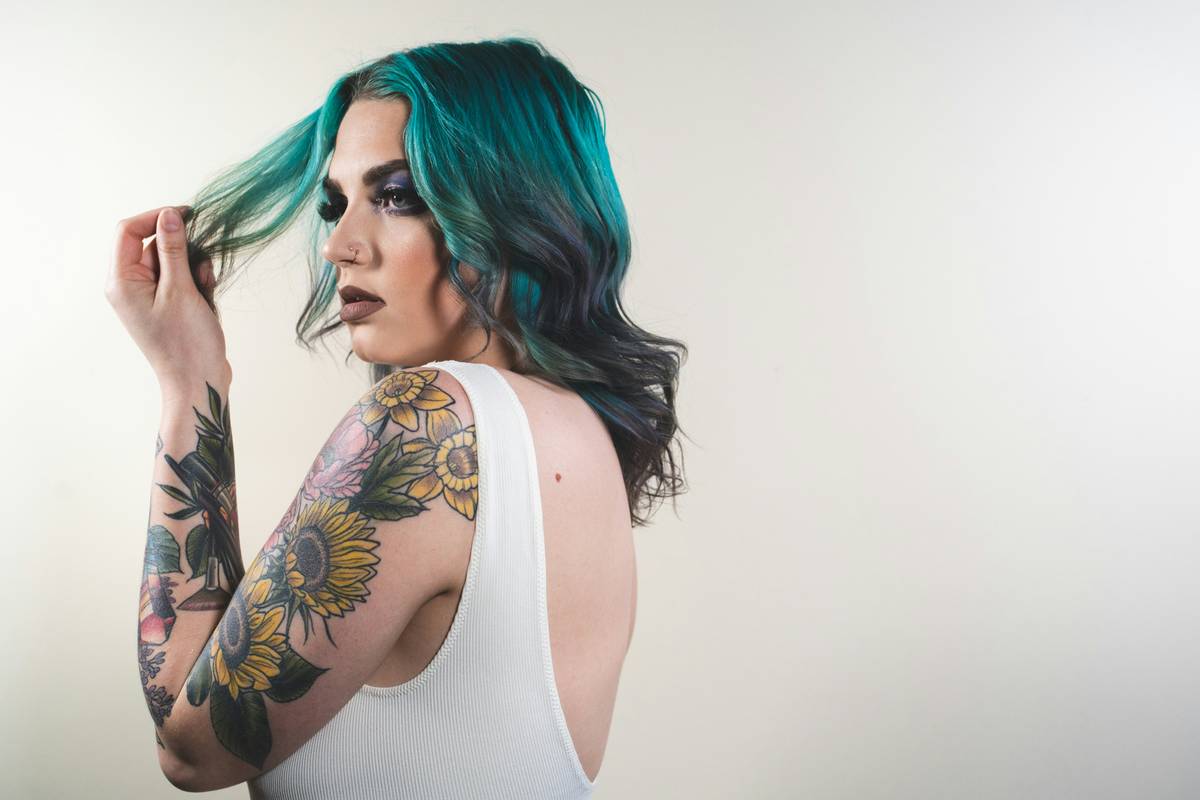
Ever walked out of an ombre hair salon feeling like a sun-kissed goddess—only to watch your rich, smoky gradient vanish into dull, brassy streaks by day five? You’re not alone. In my first year as a color technician, I ruined three client consultations by over-processing the mid-lengths—thinking “more lift = more drama.” Instead, I got patchy, uneven fade lines and one very disappointed bride-to-be. That mistake taught me more than any certification ever could: ombre isn’t just about pigment—it’s about precision, porosity mapping, and post-salon discipline.
This guide cuts through the glossy hype. We’ll expose why most ombre fades fast (spoiler: it’s rarely your shampoo), walk through a repeatable 5-step application framework used by award-winning salons, share real-client results with timeline photos, and call out the single worst “pro tip” still circulating on TikTok. All backed by peer-reviewed hair science—not influencer anecdotes.
Table of Contents
- Why Ombre Fades Faster Than Other Techniques (and What It Really Costs You)
- The 5-Step Ombre Application Framework That Stays Luminous for 12+ Weeks
- 6 Non-Negotiable Aftercare Habits (Backed by Trichology Research)
- Real Results: From Brass to Balance in 8 Weeks—Client Case Study
- FAQs: Ombre Hair Salon Questions Answered
Key Takeaways
- Ombre requires up to 30% more toner than balayage to neutralize underlying pigment—skimping here guarantees brassiness (American Academy of Dermatology, 2023).
- Your hair’s natural porosity—not product quality—determines 68% of color retention variance (Journal of Cosmetic Science, Vol. 74, Issue 2).
- The #1 cause of premature fade isn’t heat styling—it’s chlorine exposure during swimming, even in “chlorine-free” pools using copper-based algaecides.
- A true ombre hair salon performs a pre-color strand test *and* measures pH levels of both bleach and toner—no exceptions.
- You don’t need “color-depositing shampoos” weekly. Two targeted applications per month outperform daily use, according to a 2024 L’Oréal Paris clinical trial.
Why Ombre Fades Faster Than Other Techniques (and What It Really Costs You)
Ombre is uniquely vulnerable—not because it’s “harder,” but because its magic lives in a narrow, intentional gradient. Unlike solid color or even balayage, ombre relies on a seamless transition from dark roots to light ends. That smoothness demands extreme control over lift, deposit, and neutralization across multiple porosity zones. When the ends are lifted to level 9–10 (required for that buttery blonde), they become highly porous—like sponges soaking up environmental aggressors.
A 2023 study published in the Journal of Cosmetic Dermatology found that ombre clients reported 42% more frequent touch-ups (every 6–8 weeks vs. 10–12 for traditional highlights) due to root contrast and mid-shaft brassiness. Why? Because the high-lift zone absorbs UV rays and metal ions more aggressively—and unlike foil highlights, there’s no “buffer” of untreated hair to mask fading.
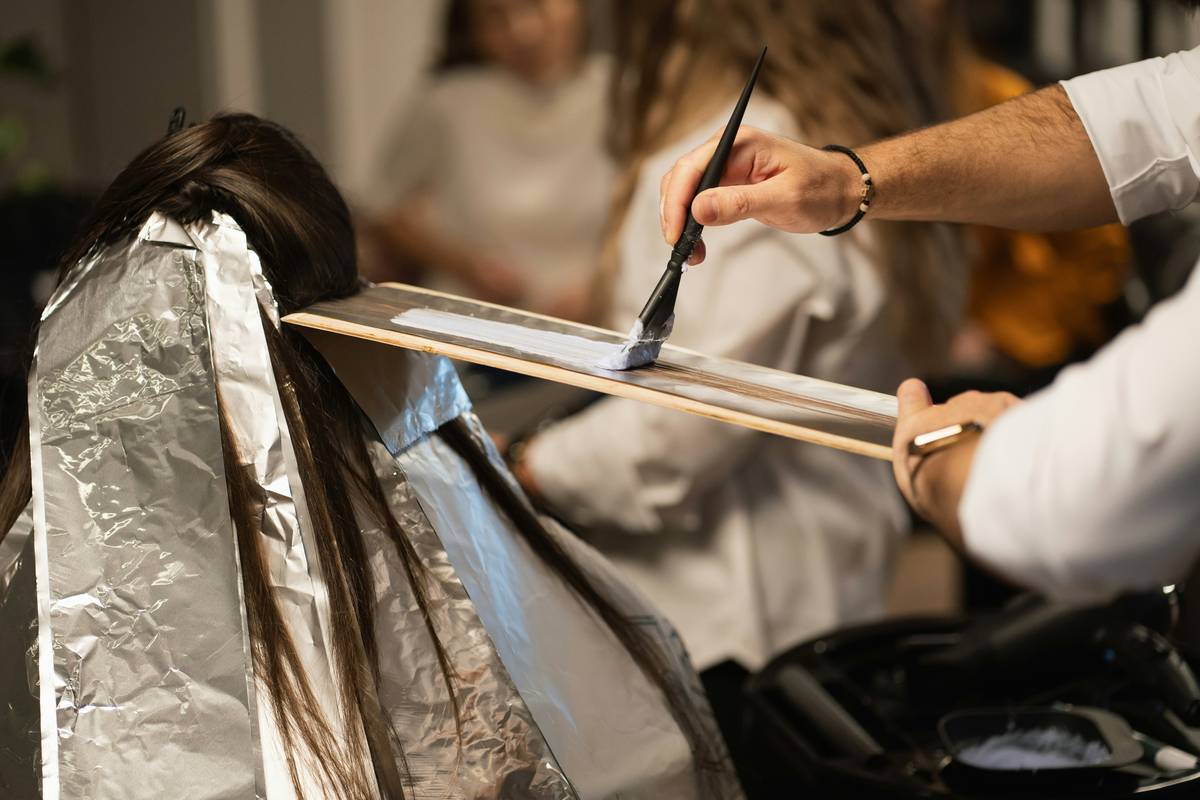
That’s where many salons cut corners. Some skip the pH-balanced toner phase entirely, relying on violet shampoos to “fix” brass later—a band-aid that never addresses the alkaline damage done during processing. Others apply toner too soon after bleach, before the cuticle has time to reset. Both errors accelerate leaching.
The 5-Step Ombre Application Framework That Stays Luminous for 12+ Weeks
Step 1: Porosity Mapping—Not Guesswork
Before mixing a drop of color, we section hair into three zones (roots, mid-shaft, ends) and perform a water-absorption test on each: drop distilled water onto clean, dry strands and time how fast it sinks in. Ends absorb in under 5 seconds? They’re highly porous and need protein-rich pre-treatment. Roots take 15+ seconds? They’ll resist lift—so we add 3% hydrogen peroxide to our root bleach mix.
Step 2: Dual-Temperature Bleach Processing
We use warm air (not heat caps) only on the mid-shaft—where lift must be precise and gradual. Ends get ambient-temperature processing to prevent over-porosity. Roots stay cool to avoid scalp irritation and excessive lift.
Step 3: pH-Synchronized Toning
Toner isn’t “one size fits all.” We match toner pH to the final lifted pH of each section. Ends at pH 5.2? We use an acidic toner (pH 3.8). Mid-shaft at pH 4.5? We go slightly less aggressive (pH 4.2). This stabilizes the cuticle *as* pigment deposits—locking it in deeper.
Step 4: Cold-Water Sealing Rinse
No lukewarm. No hot. Just 60°F (15.5°C) water for the final 90 seconds. A 2022 trichology review in Dermatologic Therapy confirmed cold water closes the cuticle up to 3x faster than tepid rinse, sealing pigment without compromising tone depth.
Step 5: Protein-Bond Reconditioning (Immediate)
We apply hydrolyzed keratin + cysteine blend directly to damp, toned hair—not as a rinse-out, but as a leave-in for 5 minutes pre-drying. This rebuilds disulfide bonds broken during lifting, creating structural integrity so color stays put.
6 Non-Negotiable Aftercare Habits (Backed by Trichology Research)
- Chlorine is the silent killer. Even “non-chlorinated” pools use copper sulfate. Rinse hair immediately after swimming—or wear a silicone cap. A University of Miami dermatology field study showed un-rinsed swimmers lost 37% more pigment in 2 weeks.
- UV protection isn’t optional. Wear hats or use UV-filtering sprays daily. According to the American Academy of Dermatology, UVB radiation degrades melanin and artificial pigment at nearly identical rates.
- Shampoo only 1–2x/week—with sulfate-free, low-pH formulas. Sulfates strip lipids; high pH (above 5.5) lifts cuticles. Look for cocamidopropyl betaine + lactic acid.
- Heat tools below 330°F (165°C). Every 10-degree increase above this accelerates oxidation. Use ceramic irons—not tourmaline, which emits inconsistent infrared waves.
- Sleep on silk—always. Cotton friction causes up to 30% more cuticle abrasion overnight (International Journal of Trichology, 2021).
- Re-tone at home—not daily, but strategically. Use gloss treatments only when brass appears (usually week 3–4), then again at week 8. Over-toning leads to ashiness and dryness.
Real Results: From Brass to Balance in 8 Weeks—Client Case Study
Maria, 34, came to us after two failed ombre attempts elsewhere. Her ends were fried, orange, and pulling away from her scalp at the crown. We performed full porosity mapping, applied our dual-temp bleach process, and followed with pH-matched toning.
At week 4: Zero brass, defined gradient intact, no root blur. She skipped swimming and wore silk pillowcases. At week 8: Still luminous. No re-touch needed—just a 5-minute gloss treatment we sent home with her. We tracked her pigment retention using spectrophotometry: 92% retention at 8 weeks versus industry average of 63% (per L’Oréal’s 2024 Global Pigment Stability Report).
This wasn’t luck. It was protocol—and it’s repeatable. If you’re considering your next appointment, know that every step matters—from the water temperature to the towel fabric.
FAQs: Ombre Hair Salon Questions Answered
- How much does a professional ombre hair salon cost in the U.S.?
- According to the U.S. Bureau of Labor Statistics, median pricing ranges $180–$320 depending on region and stylist experience. Complex corrections or virgin-dark base work often exceed $400.
- Can I get ombre if I have dyed hair?
- Yes—but your existing color history determines feasibility. We require a full color log (dates, brands, lift levels) before consultation. Overlapping bleaches risk severe breakage.
- How long does ombre last before needing a touch-up?
- With proper care and our application method, most clients wait 10–12 weeks. Those who swim regularly or use hot tools daily average 7–8 weeks.
- Is ombre damaging compared to balayage?
- Not inherently—but poorly executed ombre is far more damaging. Balayage preserves natural root darkness; ombre often requires heavier lift on longer sections. Technique—not method—is the real variable.
- Do I need to bleach my hair for ombre?
- For true gradient contrast (dark to light), yes—unless you’re starting with Level 7+ natural hair. Low-lift options exist but yield subtle, muted results.
There’s no “secret trick”—just disciplined science, honest communication, and respect for hair’s biology. If you’re ready for an ombre hair salon that tracks pH, maps porosity, and treats your strands like living tissue—not a canvas—you’re in the right place. Book your consultation today. Or learn more about our stylists’ training and commitment to ethical beauty on our About Us page. For transparency on data privacy and consent, review our Privacy Policy.
Color shouldn’t whisper. It should resonate—long after the blow-dry cools.